JTB India | Perfect moment, always

Strategic Meetings Management

The banner image of the blog on the topic How SMM helps you in Resource Optimisation.

How SMM Helps with Resource Optimization?

Effective meeting management stands as a cornerstone for your business success. Amidst the myriad challenges and opportunities, Strategic Meetings Management (SMM) emerges as a pivotal solution, poised to streamline processes and optimise invaluable resources. 

This blog explores how SMM saves your resources and promises substantial savings and operational enhancements for enterprises. By understanding and harnessing the power of SMM, organisations can navigate through the complexities of meeting management with finesse, ensuring that every interaction contributes meaningfully to overarching business objectives. 

As the business landscape continues to evolve, the significance of strategic resource allocation becomes increasingly apparent, making SMM an indispensable tool in the arsenal of forward-thinking enterprises. Without further ado, let’s uncover the transformative potential of SMM in reshaping resource management paradigms and driving sustainable growth.

How Does SMM Save Your Resources, Including Time and Effort?

Strategic Meetings Management serves as a beacon of efficiency in the realm of corporate event planning and execution. By leveraging SMM processes and tools, organisations can realise substantial savings in both time and effort. Here’s how: 

Leveraging Automation for Time Efficiency

SMM epitomises efficiency through its innovative automation features. By automating tasks like scheduling appointments, managing registrations, and coordinating logistics, SMM liberates valuable time for stakeholders, enabling them to concentrate on strategic endeavours.

Also according to a study by McKinsey & Company, automation raises productivity growth globally by 0.8 to 1.4% annually. This automation not only expedites processes but also ensures consistency and accuracy in execution.

But why is this automation crucial? It is crucial because time is a precious resource, and manual handling of tasks can be both time-consuming and error-prone. By automating these processes, SMM ensures that valuable time is saved, allowing stakeholders to focus on strategic initiatives that drive business growth.

To leverage automation for time efficiency, it’s essential to implement a comprehensive SMM strategy that incorporates automation tools and technologies. These tools streamline processes, eliminate manual intervention, and enable seamless coordination across all aspects of meeting management.

Here, JTB India steps in. With our expertise in SMM solutions, we offer advanced automation tools tailored to meet your organisation’s unique needs. Our platform streamlines the entire meeting planning process, ensuring that tasks are completed efficiently and accurately.

By leveraging JTB India’s automation capabilities, you can unlock a host of benefits, including enhanced productivity, reduced errors, and improved overall efficiency. With automation at the core of our SMM approach, we empower businesses to optimise their time resources effectively, driving success in today’s competitive business environment.

Centralised Data Management: The Backbone of SMM

Centralised data management is integral to effective Strategic Meetings Management (SMM), serving as its backbone for efficient planning and execution. It involves consolidating all meeting-related information into a single repository, eliminating data silos and redundancy. This approach fosters collaboration among team members, enhancing communication and coordination throughout the meeting lifecycle.

Centralised data management with the help of JTB Connect ensures stakeholders have real-time access to accurate data, empowering them to make informed decisions promptly. It streamlines decision-making processes, enabling organisations to respond swiftly to changing circumstances and opportunities. This efficiency saves time and allows for better resource allocation, enhancing productivity and meeting outcomes.
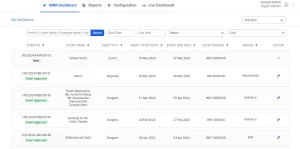
An image showing the JTB Connect dashboard, to show how SMM save your resources

Moreover, centralised data management enhances data integrity and security, mitigating the risk of errors and ensuring compliance with regulations. By maintaining organised data, organisations can avoid data inconsistencies and safeguard sensitive information effectively.

Streamlined Workflows for Optimal Productivity

SMM employs streamlined workflows to optimise task execution and maximise productivity. SMM achieves this by standardising workflows and automating repetitive tasks, allowing organisations to focus on strategic aspects while routine activities are seamlessly handled.

Research from Harvard Business Review Analytics Services reveals that 92% of executives believe streamlining workflows is essential for achieving organizational agility and resilience. By establishing clear processes and predefined steps, SMM ensures consistency and accuracy, reducing errors and inefficiencies.

Furthermore, streamlined workflows foster collaboration among team members, providing clarity on responsibilities and timelines. This creates a cohesive working environment where stakeholders can coordinate efforts effectively to achieve common objectives.

By leveraging streamlined workflows, organisations improve transparency and accountability in meeting management. Stakeholders have visibility into task status and milestones, enabling them to track progress and address issues promptly.

Cost Savings Through SMM Implementation

An image showing how SMM save your resources

Strategic Meetings Management is not only about streamlining processes but also about maximising cost efficiency. By implementing SMM practices, organisations can unlock substantial cost savings across various aspects of meeting management. Also, end-to-end SMM solutions (i.e. technology) help companies achieve over 30% higher cost savings than companies not currently using an end-to-end SMM solution;

Leveraging JTB India’s expertise, organisations can optimise budget allocation, negotiate favourable contracts with vendors, and eliminate unnecessary expenditures. With JTB India’s assistance, you can ensure that your financial resources are utilised effectively, leading to significant cost savings and a higher return on investment.

Maximising Resource Efficiency with SMM Tools and Technologies

In today’s digital age, JTB India offers a suite of innovative tools and technologies designed to enhance resource efficiency in meeting management. From high-tech event management software to advanced data analytics platforms, JTB India’s solutions provide organisations with valuable insights and automate various tasks.

With JTB India’s support, organisations can streamline workflows, improve decision-making processes, and drive better outcomes from meetings. By leveraging JTB India’s expertise and technology solutions, businesses can maximise resource efficiency and achieve their meeting objectives with ease. And now let’s explore the future of resource optimization with SMM.

Request a demo to explore JTB Connect for SMM

The Future of Resource Optimization with SMM

Looking ahead, JTB India is committed to driving continuous innovation and advancement in SMM practices and technologies. By partnering with JTB India, organisations can stay at the forefront of resource optimization in meeting management. 

    • Future-oriented: JTB India is dedicated to advancing SMM practices and technologies to meet evolving needs.
    • Partnership benefits: Organisations partnering with JTB India can stay ahead in resource optimization for meeting management.
    • Access to expertise: Leveraging JTB India’s expertise ensures organisations can maximise resource efficiency.
    • Emerging technologies: JTB India provides access to cutting-edge technologies for better resource management.
    • Sustainable growth: By implementing SMM practices, businesses can drive sustainable growth and maintain competitiveness.

With JTB India’s expertise and access to emerging technologies, businesses can maximise resource efficiency, drive sustainable growth, and maintain a competitive edge in today’s dynamic business landscape.

Conclusion

With this, you now know how SMM saves your resources. It emerges as a powerful tool for organisations to save valuable resources while optimising meeting management processes. By addressing common challenges such as time constraints and budget limitations, SMM enables efficient resource allocation and drives cost savings.

Leveraging innovative tools and technologies like JTB Connect, organisations can streamline meeting planning, execution, and analysis, leading to improved outcomes and sustainable business growth. 

As businesses strive to navigate the complexities of the modern landscape, adopting SMM practices becomes essential for staying competitive and achieving strategic objectives effectively. Take the first step towards resource optimization and business success with JTB India’s comprehensive SMM solutions. 

An image showing the CTA to elevate your business with JTB India

How SMM Helps with Resource Optimization? Read More »

The banner image of the blog on the topic, Unveiling the Role of Technology in Strategic Meetings Management

Why Technology in Strategic Meetings Management Matters?

Strategic Meetings Management (SMM) has emerged as a cornerstone of modern business operations, facilitating the seamless planning, execution, and analysis of corporate meetings and events. This is where robust technology comes in. Technology in strategic meetings management plays a pivotal role in driving organisational efficiency, and maximising the impact of meetings. From advanced event management software to innovative data analytics platforms, technology empowers businesses to streamline their meeting management efforts and achieve greater success.

But how can technology in strategic meeting management be enhanced?

What are the latest tools and trends that can help businesses shape the future of meeting management?

And many more questions must be coming into your head.

Well, we are going to answer all your questions in this blog. From the utilisation of artificial intelligence to the integration of virtual reality, we will preview key technological innovations revolutionising the way meetings and events are planned, executed, and experienced. 

What is Strategic Meetings Management (SMM)?

SMM is a systematic approach to planning and managing corporate meetings and events. It streamlines processes like venue selection, attendee management, and budgeting to boost efficiency and control costs. By centralising these tasks, organisations can ensure compliance, enhance the meeting experience, and maximise value. 

Integrating technology into SMM processes automates tasks, improves communication, and enables real-time data analysis. This technology-driven approach helps organisations adapt to evolving business demands, increase productivity, and stay competitive in today’s digital landscape.

Moreover, SMM goes beyond just planning events. It also helps with things like taking care of Environmental, Social, and Governance (ESG) management, being socially responsible, and following good governance practices. By making events more eco-friendly and socially conscious, SMM helps companies support important causes and run their events in a way that’s good for everyone. This means that events not only meet business goals but also help make the world a better place.

But How to Implement ESG Practices?

To implement ESG (Environmental, Social, and Governance) practices effectively, you must follow these steps:

    • Assess current practices: Evaluate your organization’s current environmental, social, and governance practices to identify areas for improvement.
    • Set goals: Establish clear and measurable goals for ESG initiatives, considering factors such as reducing carbon footprint, promoting diversity and inclusion, and enhancing governance transparency.
    • Develop policies and procedures: Create policies and procedures that outline how your organization will address environmental impacts, social issues, and governance practices.
    • Engage stakeholders: Involve key stakeholders, including employees, customers, investors, and community members, in the development and implementation of ESG initiatives.
    • Monitor and measure performance: Implement systems to track and measure progress towards ESG goals, using metrics such as energy consumption, employee satisfaction, and board diversity.
    • Report and communicate: Communicate your organization’s ESG efforts transparently through regular reporting and disclosure mechanisms, such as sustainability reports and investor presentations.
    • Continuously improve: Regularly review and update your ESG policies and practices to reflect changes in the business landscape and stakeholder expectations, ensuring ongoing improvement and alignment with organizational goals.

By integrating these ESG practices into event management processes, organizations can demonstrate their commitment to sustainability, social responsibility, and ethical governance, driving positive impact and enhancing their overall reputation and performance.

Importance of Technology in Strategic Meetings Management

An image showing the importance of technology in strategic meetings management

Technology is transforming the landscape of strategic meetings management, enhancing efficiency and driving impactful results. Let’s dive deeper to understand how here: 

1. Environment

Technology in Strategic Meetings Management (SMM) enhances efficiency and conserves resources by streamlining processes. It reduces paper usage and saves time and costs through digitized registration and communication.

SMM enables organizations to achieve sustainable events by implementing effective waste reduction and recycling policies. Strategies such as using reusable materials, embracing digital solutions, and providing on-site recycling facilities minimize waste generation, promoting environmental sustainability.

2. Governance

Technology-driven Strategic Meetings Management (SMM) enhances governance through increased transparency and visualization of return on investment (ROI). Real-time data and insights provided by advanced technology tools enable stakeholders to monitor event performance, track expenses, and ensure compliance with policies and regulations.

Additionally, the visualization of ROI in event management allows organizations to analyze data on attendee engagement, satisfaction, and cost-effectiveness. This empowers them to make informed decisions, optimize resource allocation, and maximize ROI effectively.

3. Social

SMM enhances stakeholder relations by considering their concerns in event planning and fostering trust and cooperation. Through technology, organizations showcase their commitment to social responsibility and ethical practices, strengthening relationships.

Furthermore, technology-enabled SMM facilitates collaboration with eco-friendly suppliers, ensuring event materials align with sustainability goals. By partnering with like-minded suppliers, organizations promote ethical sourcing and responsible consumption, contributing to ESG principles. Incorporating stakeholder engagement in SMM allows companies to address environmental and social concerns transparently. By involving stakeholders in decision-making and communicating sustainability initiatives, organizations build trust and credibility in their ESG efforts.

Incorporating stakeholder’s engagement into Strategic Meetings Management ensures that the concerns and values of all stakeholders are addressed, fostering trust and credibility in the organization’s ESG initiatives.

JTB Connect: Empowering Strategic Meetings Management with Technology

JTB Connect stands out as an innovative event management technology platform designed to revolutionise meeting processes from planning to execution. At its core, JTB Connect offers a range of features aimed at optimising meeting management practices:

Centralised Data Management

One of the key features of JTB Connect is its ability to centralise data management, allowing organisations to store and access all relevant meeting information in one secure location. This streamlines the process of organising and retrieving essential data, ensuring that stakeholders have access to the most up-to-date information at all times.

An image showing the JTB Connect dashboard, a robust technology in strategic meetings management.

Automated Workflows

JTB Connect streamlines meeting workflows through automated processes, reducing manual intervention and minimising the risk of errors. Tasks such as attendee registration, agenda scheduling, and vendor coordination are automated, freeing up valuable time and resources for organisers to focus on strategic decision-making.

An image showing the JTB Connect dashboard, a robust technology in strategic meetings management.

Real-Time Analytics

Real-time analytics capabilities provided by JTB Connect offer valuable insights into meeting performance and attendee engagement. Through intuitive dashboards and reporting tools, organisations can monitor key metrics, track progress against goals, and identify areas for improvement. This data-driven approach enables organisations to make informed decisions and optimise meeting strategies for better outcomes.

An image showing the JTB Connect dashboard, a robust technology in strategic meetings management.

In essence, JTB Connect empowers organisations to take control of their meeting management processes, driving efficiency, productivity, and success.

Request a demo to explore JTB Connect a robust Technology in Strategic Meetings Management

Key Technological Tools in Strategic Meetings Management

In the realm of Strategic Meetings Management (SMM), technological tools play a pivotal role in optimising meeting processes and driving success. Among the essential tools are event management software, mobile applications, and data analytics platforms, each offering unique features tailored to streamline meeting management efforts.

Event Management Software

Event management software serves as the backbone of Strategic Meetings Management (SMM), providing centralised platforms for planning, organising, and executing meetings and events. These software solutions offer a range of features, including:

    • Agenda management
    • Attendee registration
    • Venue sourcing
    • Budget tracking

By consolidating these tasks into a single platform, event management software enhances efficiency and facilitates seamless coordination throughout the meeting lifecycle.

Mobile Applications

Complementing event management software are mobile applications designed to enhance attendee engagement and interaction during meetings and events. These apps offer functionalities such as:

    • Live polling
    • Q&A sessions
    • Agenda updates
    • Networking opportunities

Moreover, mobile apps provide organisers with valuable insights into attendee behaviour and preferences, enabling them to make real-time adjustments and improvements to enhance overall satisfaction.

Data Analytics Platforms

Data analytics platforms are instrumental in providing organisations with actionable insights into meeting performance and attendee engagement. These platforms leverage data collected from various sources to generate comprehensive reports and analyses, including:

    • Registration forms
    • Attendee interactions
    • Post-event surveys

By analysing this data, organisations can identify trends, measure event ROI, and make data-driven decisions to optimise future meeting strategies.

Conclusion

Technology in strategic meetings management has emerged as a cornerstone, revolutionising the way organisations plan, execute, and analyse meetings and events. Throughout this blog, we’ve explored the critical role of technology in enhancing SMM processes, driving efficiency, and fostering innovation.

From essential tools like event management software and mobile apps to emerging trends like artificial intelligence and virtual reality, technology offers a myriad of opportunities for organisations to optimise their meeting management practices and stay ahead of the curve.

At the forefront of this technological revolution is JTB Connect, an innovative event management platform that empowers organisations to streamline meeting processes, automate workflows, and gain valuable insights through real-time analytics.

Looking ahead, the future of technology in SMM holds even greater promise, with advancements, innovations, and opportunities on the horizon. Organisations must embrace these changes, leverage technology effectively, and remain adaptable to drive SMM success in an ever-evolving business landscape.

Request a demo to explore JTB Connect, a robust technology in strategic meetings management.

Why Technology in Strategic Meetings Management Matters? Read More »

An image showing the banner image of the blog on the topic 7 benefits of strategic meetings management implementation in your business

Why Choose Strategic Meetings Management for Effective Meetings?

Are you tired of inefficient and costly meeting management processes dragging down your business operations?

You’re not alone. Optimising meetings and events has become crucial for staying competitive. That’s where Strategic Meetings Management (SMM) steps in to revolutionise your business meetings and corporate events approach.

SMM is not just about managing meetings; it’s about transforming the way your organisation plans, executes, and benefits from corporate events. You know the definition of SMM in brief. That’s why we have come here to explore why you should choose strategic meetings management for effective meetings.

Let’s get started!

1. Cost Savings

An image showing the benefits of implementing strategic meetings management by saving the cost

The first reason to implement Strategic Meetings Management is cost savings. It is essential for optimising meeting-related expenses in today’s cost-conscious business environment. By streamlining processes, negotiating favourable contracts with suppliers, and centralising management, SMM yields substantial cost savings, typically ranging from 10-25% on meeting budgets. These savings offer organisations the opportunity to reallocate resources towards strategic initiatives or reinvest in core business activities, enhancing financial efficiency and flexibility.

With SMM, you can adapt to changing market conditions and seize growth opportunities more effectively. For this, you can also leverage JTB India’s SMM service to further enhance cost-saving efforts. JTB India’s expertise in effective meeting management, along with its extensive network and negotiating power, ensures that organisations maximise their cost-saving potential. 

Through personalised strategies tailored to each client’s unique needs, JTB India enables businesses to achieve significant savings while maintaining high-quality meeting experiences. By partnering with JTB India for SMM, organisations can unlock greater financial efficiency and drive sustainable growth.

2. Enhance Efficiency and Productivity

Efficiency and productivity are critical factors for organisations striving to remain competitive in the modern dynamic business environment. Strategic Meetings Management is instrumental in enhancing these aspects by automating tasks, standardising procedures, and centralising the planning process.

By streamlining meeting processes, SMM alleviates administrative burdens, reduces errors, and expedites decision-making, resulting in enhanced operational efficiency and productivity. When workflows are smoother, employees have more time for important tasks like innovation and strategic initiatives, leading to better business performance.

Also, JTB India’s SMM services augment efficiency and productivity improvement efforts. Leveraging JTB India’s expertise in meeting management and its innovative technology solutions, you can streamline your meeting processes and optimise resource utilisation. JTB India customises strategies to help clients increase efficiency without sacrificing productivity. By working with JTB India for social media management, companies can improve efficiency and productivity, leading to sustainable growth and success.

3. Improve Risk Management and Compliance

Effective risk management and compliance are critical for organisational success and reputation in today’s highly regulated business environment. Strategic Meetings Management offers organisations improved visibility and control over meeting activities. It allows them to mitigate associated risks and ensure effective meetings and events.

By standardising processes, enforcing policies, and centralising data management, SMM reduces the likelihood of compliance breaches, security incidents, and legal liabilities. This not only safeguards the organisation’s reputation and financial interests but also enhances stakeholder’s trust and confidence, reinforcing its position as a responsible corporate citizen.

With JTB India’s expertise and innovative technology solutions, organisations can implement robust risk mitigation strategies and ensure adherence to regulatory requirements. Their comprehensive approach to compliance management and proactive risk identification minimises exposure to potential threats and vulnerabilities.

Also, the PWC report highlights that 71% of Indian organisations analyse cybersecurity and IT data for risk management, surpassing the global average of 61%. Similarly, 63% of Indian companies analyse regulatory and compliance data for risk management, compared to the global average of 50%. These statistics emphasise the importance of using SMM tools like JTB India’s solutions for effective risk management and compliance.

4. Enhance Attendee Experience and Satisfaction

Strategic Meetings Management isn’t just about organizing events; it’s about creating unforgettable experiences for attendees. SMM empowers organizations to customize every aspect of the event journey to meet attendees’ expectations and preferences. From seamless registration processes to engaging content and interactive activities, SMM ensures that every attendee interaction leaves a lasting impression. By prioritizing attendee satisfaction, organizations can nurture stronger relationships, build brand loyalty, and amplify the impact of their events.

Increased attendee engagement directly benefits companies. Engaged and satisfied attendees are more likely to return for future events and recommend them to others. SMM enables organizations to enhance the attendee experience by anticipating their needs, providing personalized services, and fostering meaningful engagement opportunities. Whether through innovative technology solutions or meticulous event management, SMM ensures that every attendee feels valued and appreciated.

Moreover, satisfied attendees are more inclined to actively participate in events, share ideas, and collaborate with peers, leading to more enriching discussions and better outcomes. Investing in attendee satisfaction through SMM helps organizations differentiate themselves, expand their business, and achieve long-term success.

Request a demo to explore JTB Connect for SMM

5. Make Informed Decisions with Data-Driven Analysis

An image showing the benefits of strategic meetings management implementation with which you can make smart decisions by using the data-driven analysis

Data-driven decision-making is a crucial aspect of Strategic Meetings Management, offering organisations valuable insights into meeting activities, attendee behaviour, and spending patterns. With SMM programs, organisations can access comprehensive data and analytics through Strategic Meetings Management platforms like JTB Connect, allowing them to make informed decisions that optimise meeting strategies and outcomes. JTB Connect provides robust reporting and analytics features that enable organisations to analyse meeting data effectively.

By leveraging these insights, organisations can identify trends, opportunities, and challenges, enabling them to improve their meeting strategies for better results continuously. Whether it’s identifying cost-saving opportunities, optimising resource allocation, or enhancing attendee experiences, data-driven decision-making facilitated by JTB Connect empowers organisations to achieve their meeting objectives more effectively and efficiently. This not only drives overall business success and growth but also strengthens the organisation’s competitive position in the market.

6. Cost-Effective Sustainability Initiatives

Nearly 50% of corporate event attendees see hybrid events as the future’s ideal format, surpassing exclusively in-person or virtual-only events. SMM offers organisations the chance to align meeting practices with sustainability initiatives, yielding dual benefits for the environment and the bottom line.

By employing SMM strategies like virtual meetings to mitigate travel-related emissions, embracing eco-friendly practices, and minimising waste, organisations can contribute to environmental preservation while simultaneously cutting meeting costs.

These cost-effective sustainability initiatives not only enhance corporate social responsibility but also bolster brand reputation and attract environmentally conscious stakeholders. By demonstrating a commitment to sustainability through SMM, organizations can positively impact society and the planet while efficiently and responsibly achieving meeting objectives. Moreover, embracing sustainability aligns with Environmental, Social, and Governance (ESG) management perspectives, showcasing a dedication to responsible business practices.

Prioritizing sustainability fulfils organizations’ corporate responsibility to protect the earth and make positive contributions to society, reinforcing their position as ethical leaders in their respective industries. Leveraging JTB’s comprehensive suite of services and expertise in SMM, organizations can seamlessly integrate sustainability practices into meeting management processes, further advancing environmental stewardship efforts.

7. Gain a Competitive Advantage with SMM

The seventh key benefit of Strategic Meetings Management is gaining a competitive advantage in the market. Partnering with a trusted SMM provider like JTB India equips you with the tools and expertise needed to outshine competitors and thrive in the industry while driving 12-15% more value from events. With JTB India’s comprehensive suite of services and industry-leading practices, organizations can leverage SMM to drive business success and surpass their rivals.

From maximizing cost savings to enhancing efficiency, risk management, and attendee satisfaction, JTB India enables organizations to stay ahead of the curve and achieve their meeting objectives with excellence. By embracing SMM, organizations can differentiate themselves in the marketplace, solidify their market position, and achieve sustainable growth in today’s competitive business landscape.

That was all about the benefits of strategic meetings management. Let us now conclude our blog.

Conclusion

Strategic Meetings Management vis a vis SMM offers numerous benefits crucial for modern businesses. From cost savings to enhanced efficiency and attendee satisfaction, SMM ensures effective meeting process. Partnering with a trusted provider like JTB India maximises these benefits, ensuring access to expertise and resources that drive success. 

Further, embracing SMM is essential for organisations aiming to navigate meeting complexities efficiently and achieve long-term growth. By investing in SMM and partnering with experts like JTB India, organisations can optimise resources and achieve meeting objectives confidently.

Request a demo to explore JTB Connect for SMM

Why Choose Strategic Meetings Management for Effective Meetings? Read More »

The banner image of the blog on the topic What Is Strategic Meetings Management and How Can It Benefit You?

What Is Strategic Meetings Management and How Can It Benefit Your Business?

Ain’t your business meetings delivering the outcomes you desire, or are they falling short amidst growing time and resource constraints? Well, in today’s fast-paced business world, effective meeting management is essential for staying competitive.

This is where Strategic Meetings Management (SMM) comes in. With SMM, you can transform and effectively boost event planning and management. And by strategically outsourcing the complexities of meeting management, you can optimise resources and streamline processes.

But what exactly is SMM and how can it benefit your organisation? 

SMM involves strategically overseeing all aspects of meetings and aligning objectives with broader business goals. Not just that, it has much more to offer. That’s why we have created this guide to explore what Is strategic meetings management and how can it benefit your business, along with the fundamentals of SMM, uncovering its benefits – from cost savings to enhanced productivity and improved attendee satisfaction. 

Let’s dive in and learn what is strategic meetings management and how can it benefit you here. 

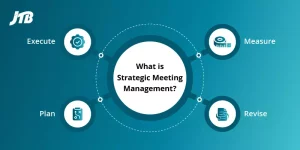
What is Strategic Meetings Management?

An image showing what is strategic meetings management and How Can It Benefit?

Strategic Meetings Management (SMM) is a systematic approach to planning, executing and evaluating meetings and events within an organisation. It involves aligning meeting activities with the organisation’s overall objectives and priorities to maximise efficiency, effectiveness and return on investment.

Further, SMM encompasses various elements, including sourcing venues, managing logistics, budgeting, attendee registration and post-event analysis. This brings us to the key components and phases of it. Let’s dive in to understand. 

Key Components and Phases of SMM

SMM comprises several key components and phases that collectively contribute to its success:

    • Meeting Strategy: This involves defining the purpose, scope and goals of meetings and events within the organisation. It includes establishing policies and guidelines for conducting meetings in alignment with business objectives.
    • Meeting Definition: In this phase, specific meetings and events are identified based on their strategic importance and potential impact on organisational goals. It includes categorising meetings by type, size, frequency and audience.
    • Meeting Policy: Developing and implementing policies and procedures to govern meeting-related activities, including budgeting, vendor selection, contract negotiation and compliance with regulatory requirements.
    • Meeting Registration Process: Creating standardised processes for attendee registration, including online registration platforms, attendee data management and communication protocols.
    • Centralised Sourcing/Procurement: Streamlining the sourcing and procurement of meeting-related services, such as venues, catering, audiovisual equipment and transportation, to leverage economies of scale and negotiate favourable terms with suppliers.

After knowing the key components, you must be wondering why it is important to implement strategic meetings management, right? We have got you covered. 

Importance of Standardised Processes and Technology in SMM Implementation

Standardised processes and technology play a crucial role in the successful implementation of SMM. Here’s why:

    • Efficiency and Consistency: Standardised processes ensure consistency and efficiency across all meeting-related activities, reducing manual errors and streamlining workflows.
    • Data Integration and Analysis: Technology solutions such as JTB Connect facilitate the integration of meeting data from various sources, allowing for comprehensive analysis and reporting on meeting performance, attendee satisfaction and ROI.
    • Cost Savings: By centralising procurement and standardising processes, organisations can achieve cost savings through economies of scale, vendor consolidation and improved negotiation leverage.
    • Compliance and Risk Management: Standardised processes and technology enable organisations to enforce compliance with internal policies, regulatory requirements and industry standards, reducing the risk of non-compliance and associated penalties.
    • Enhanced Visibility and Control: Technology solutions provide real-time visibility into meeting activities, budgets and expenditures, empowering organisations to make informed decisions, identify areas for improvement and optimise resource allocation.

Now that you know what is strategic meetings management and its importance, let’s move ahead and explore the advantages of it. 

5 Advantages of Strategic Meetings Management

An infographic image created by JTB India showing 5 Benefits of Strategic Meetings Management including, Increase Efficiency and Productivity, Cost Savings and Optimization, Enhance Attendee Experience, Improve Data Management and Analytics and Better Control and Compliance

SMM goes beyond mere cost savings, offering a range of advantages that enhance efficiency, attendee experience, data management and compliance. Let’s dive into the five key advantages of implementing SMM:

  • Increase Efficiency and Productivity

SMM simplifies meeting management, saving time and resources by automating tasks like venue sourcing and budgeting. This streamlines workflows, allowing teams to focus on strategic initiatives.

  • Cost Savings and Optimization

SMM centralises procurement processes and allows organisations to negotiate favourable contracts. This centralised approach leads to cost reductions and better allocation of resources, ultimately maximising Return on Investment (ROI). By optimising procurement processes and negotiating better contracts, organisations can achieve significant cost savings.

  • Enhance Attendee Experience

SMM focuses on creating memorable events by offering user-friendly registration processes and personalised experiences for attendees.

This emphasis on attendee experience fosters engagement and loyalty among participants, leading to more successful and impactful events. By prioritising attendee experience, organisations can enhance the overall effectiveness of their meetings and events.

  • Improve Data Management and Analytics

SMM provides access to comprehensive data and analytics, enabling data-driven decision-making in meeting and event planning. By leveraging data insights, organisations can make informed decisions, enhance planning processes and support continuous improvement efforts. This access to data and analytics enhances the overall effectiveness and success of meetings and events.

  • Better Control and Compliance

SMM establishes standardised processes and compliance controls, mitigating risks associated with meeting and event management. By adhering to policies and regulations, organisations ensure transparency and maintain compliance with internal and external standards. This emphasis on control and compliance minimises risks and ensures that meetings and events are conducted in a structured and compliant manner.

You can also leverage these benefits by implementing strategic meetings management effectively in your organisation. Also, this will empower you to optimise processes, achieve objectives and stay competitive.

After knowing what Is strategic meetings management and how can it benefit you, you must embrace SMM best practices and technology solutions that can propel your organization forward in today’s dynamic landscape.

Request a demo to explore JTB Connect for SMM

How to Implement Strategic Meetings Management in Your Business?

Implementing a Strategic Meetings Management (SMM) program requires careful planning and execution. Here are the key steps involved:

Step 1: Assessment and Planning

Start by assessing your organisation’s current meeting management practices, identifying pain points and setting clear objectives for the SMM program. Develop a comprehensive plan outlining the scope, goals, timeline and budget for implementation.

Step 2: Stakeholder Engagement

Gain buy-in from key stakeholders across departments, including finance, procurement, marketing and human resources. Align their priorities with the goals of the SMM program to ensure support and collaboration throughout the implementation process.

Step 3: Technology Evaluation

Evaluate available technology solutions that align with your organisation’s needs and objectives. Consider factors such as scalability, ease of integration with existing systems, user-friendliness and vendor support. Choose a technology platform that offers features such as venue sourcing, budgeting, registration management and reporting.

Step 4: Vendor Selection

Select service providers who specialise in meeting management and demonstrate expertise in implementing SMM programs. You can also reach out to JTB India as they have global connections and vendors with a proven track record, industry certifications and a strong reputation for customer service.

Also, you must conduct thorough due diligence, including requesting proposals, conducting interviews and checking references.

Step 5: Customization and Integration

Work closely with your chosen technology provider such as JTB Connect to customise the platform to meet your organisation’s specific requirements. Ensure seamless integration with existing systems such as CRM, ERP and financial software to facilitate data sharing and streamline processes.

Step 6: Training and Onboarding

Provide comprehensive training to internal stakeholders and end-users to ensure they are proficient in using the SMM platform. Offer ongoing support and resources to address any questions or challenges that arise during the onboarding process.

Step 7: Monitoring and Optimization

Continuously monitor the performance of the SMM program, tracking key metrics such as cost savings, attendee satisfaction and compliance. Identify areas for improvement and optimization, making adjustments as needed to maximise the program’s effectiveness.

By following these steps and leveraging the right technology and service providers, you can successfully implement an SMM program that enhances efficiency, drives cost savings and improves the overall effectiveness of your meeting management processes.

Tips to Utilise Strategic Meetings Management Effectively 

Implementing Strategic Meetings Management (SMM) may pose challenges. Here’s how to overcome them:

    • Engage Stakeholders: Keep everyone informed and involved from the start. Share goals, benefits and expectations clearly to gain support.
    • Set Clear Objectives: Define specific, achievable goals like cost savings and efficiency improvements. Track progress regularly.
    • Tailor Solutions: Customise the program to fit your organisation’s unique needs and workflows.
    • Provide Training: Ensure all users understand the tools and processes through comprehensive training and ongoing support.
    • Promote Compliance: Encourage adoption by highlighting benefits and enforcing policies. Continuously reinforce adherence.
    • Continuous Improvement: Regularly review performance, gather feedback and make iterative changes for ongoing optimization.

With these tips, organisations can navigate SMM implementation successfully, driving better meeting management outcomes.

Conclusion

SMM aka Strategic Meetings Management offers a robust framework for enhancing meeting and event management processes within organisations. By strategically aligning objectives with broader business goals, implementing standardised processes and harnessing the power of technology, businesses can unlock a myriad of benefits, ranging from cost savings to heightened productivity and attendee satisfaction.

Now that you know what Is strategic meetings management and how can it benefit you, consider collaborating with JTB India, a trusted leader in corporate event and travel management. With our extensive suite of services and specialised expertise in Strategic Meetings Management, we can assist you in navigating the intricacies of meeting management, optimising processes and realising your business objectives. 

Request a demo to explore JTB Connect for SMM


What Is Strategic Meetings Management and How Can It Benefit Your Business? Read More »

The banner image of the blog on the topic, Explore how strategic meeting management in healthcare sector works

Meetings Management: The Future of Healthcare Strategy

In the ever-evolving landscape of the healthcare sector, where precision and collaboration are paramount, the role of strategic decision-making cannot be overstated.

As healthcare professionals navigate the complexities of patient care, research advancements, and industry regulations, the need for a systematic approach to meetings and conferences becomes increasingly apparent.

That’s where Strategic Meetings Management (SMM) in healthcare becomes a game-changing paradigm. It has emerged as a beacon of efficiency and effectiveness in the healthcare realm.

But do you know what exactly SMM is and how it can benefit you in the healthcare industry?

Let’s explore them here.

What is Strategic Meetings Management in Healthcare?

An image showing what is strategic meetings management in healthcare

Strategic Meetings Management is a smart and organized way of handling meetings and conferences within a company.

It means standardized processes, tech-savvy solutions, and ongoing improvements tailored to your specific role. It’s not just about managing meetings; it’s about enhancing your impact within the organization. Whether you’re handling details, balancing budgets, or setting the strategic direction, SMM is your partner in ensuring each meeting contributes to the organization’s success.

But why is it important in the healthcare industry?

Importance of Strategic Meetings Management in Healthcare Organizations

Strategic meetings management in the healthcare sector is crucial due to its potential to bring about transformative improvements in various aspects of the industry. Here are key reasons why it is crucial:

    • It helps professionals work together more effectively, improving communication for better patient care.
    • In a budget-sensitive field, SMM ensures meetings are cost-effective, using resources wisely to meet organizational goals.
    • It ensures that meetings follow regulations, reducing legal risks and keeping organizations within industry guidelines.
    • It aligns meetings with the overall strategy, helping leaders make informed decisions that positively impact patient care.
    • It adapts to changes in a dynamic sector, ensuring the meeting process stays relevant and effective.
    • It organizes training sessions, conferences, and seminars, promoting ongoing learning for professionals.

In essence, SMM is more than just a process—it’s a strategic approach that enhances collaboration, efficiency, and patient outcomes.

But there are certain challenges that you can face in this industry.

Key Challenges

In the healthcare sector, effective communication and collaboration are crucial for success. However, organizations often face numerous challenges in this regard. To address these challenges and drive positive change, strategic meeting management plays a pivotal role.

1. Technology Integration

The rapid evolution of healthcare technology poses challenges in integrating new systems with existing infrastructure, impacting seamless communication and data sharing.

2. Data Security and Privacy

With the increasing digitization of healthcare records, safeguarding patient data against breaches and ensuring compliance with privacy regulations are persistent challenges.

3. Workforce Shortages

Shortages of skilled healthcare professionals, including nurses and physicians, create strain on their systems, leading to increased workloads and potential gaps in patient care.

4. Financial Pressures

Balancing the delivery of quality care with cost constraints is an ongoing challenge. Healthcare organizations often face financial pressures due to reimbursement changes and rising operational costs.

5. Regulatory Compliance

Adhering to a myriad of healthcare regulations and standards, including those related to billing, coding, and patient care, poses a significant challenge for healthcare providers.

6. Interoperability Issues

Inconsistent standards and lack of interoperability among healthcare systems hinder the seamless exchange of patient information between different providers and institutions.

7. Chronic Disease Management

The rising prevalence of chronic diseases presents challenges in developing effective, long-term management strategies, impacting both patient well-being and healthcare system sustainability.

8. Knowledge Sharing and Collaboration

Strategic meetings in healthcare bring experts together, creating a space for sharing knowledge and ideas. This collaboration helps you stay current with the latest advancements and promotes innovation.

9. Networking and Relationship-building

Strategic meetings let professionals connect with industry leaders, decision-makers, and influencers. This networking opportunity opens doors for collaboration and growth.

10. Driving Operational Efficiency

Strategic meeting management helps organizations improve their operations. Planning and executing meetings carefully streamline processes, cut costs, and boost overall efficiency. From choosing the venue to handling logistics, every step in SMM contributes to better operational effectiveness.

That’s about challenges, now, let’s discover how SMM transforms healthcare by exploring its key benefits, enhancing collaboration, and making operations more efficient.

Benefits of Implementing Strategic Meetings Management

Following are the benefits that you can leverage while implementing SMM:

    • Cost Savings in Healthcare Operations: Controlling costs is critical. SMM enables informed decision-making regarding venue selection, travel expenses, and other meeting-related costs, contributing to overall cost savings within the organizations.
    • Ensured Regulatory Compliance: SMM helps healthcare organizations navigate complex regulations, ensuring that meetings and conferences adhere to compliance standards. This reduces the risk of legal issues and reinforces a commitment to patient safety and regulatory requirements.
    • Strategic Decision-Making for Leaders: SMM aligns meetings with healthcare organizational goals, providing leaders with the insights needed for strategic planning. This strategic alignment enhances decision-making processes in healthcare management.
    • Professional Development Opportunities: Through well-organized healthcare conferences and events, SMM contributes to the professional development of teams. Attendees gain access to learning opportunities, networking with peers, and staying updated on medical advancements.
    • Positive Stakeholder Relationships: SMM helps build and strengthen relationships with key stakeholders in the healthcare sector, including patients, medical partners, and industry influencers.
    • Adaptability to Evolving Healthcare Environments: SMM’s adaptability allows healthcare organizations to navigate changes in the its landscape, staying responsive to emerging trends, technological advancements, and evolving patient care practices.

And now comes the tips for you to use.

Request a demo to explore JTB Connect for SMM

Best Practices for Strategic Meetings Management in Healthcare

Following these straightforward practices ensures that strategic meetings management in healthcare is an effective strategy contributing to better patient care and overall organizational success:

    • Clear Objectives: Clearly state the purpose of each meeting and connect it to overall healthcare goals.
    • Cross-functional collaboration: Encourage teamwork among healthcare professionals from different areas.
    • Effective Technology Use: Use technology wisely for planning, communication, and secure data sharing.
    • Comprehensive Agenda Planning: Plan meetings with detailed agendas, focusing on relevant healthcare topics.
    • Strategic Venue Selection: Choose accessible and well-equipped venues, considering virtual options.
    • Data Security Measures: Implement strong data security to protect patient information.
    • Regular Evaluation and Improvement: Get feedback after meetings to improve the process continually.
    • Cost Management: Control costs by exploring cost-effective alternatives and managing expenses.
    • Compliance Adherence: Stay informed about healthcare regulations and design meetings to comply.
    • Promote Continuous Learning: Include educational components for ongoing professional development.
    • Communication and Transparency: Encourage open communication and be transparent about meeting goals and outcomes.
    • Leadership Involvement: Involve healthcare leadership actively in meeting planning and execution.

Now that you’ve learned the best practices, explore some training and certification programs to get the upper hand in this sector.

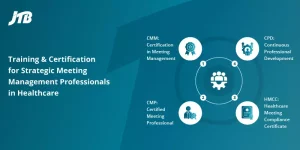
Training and Certification for Strategic Meetings Management Professionals in Healthcare

Alt text: An infographic image showing 4 Training and Certification for Strategic Meetings Management Professionals in Healthcare; Certification in Meeting Management (CMM), Certified Meeting Professional (CMP), Healthcare Meeting Compliance Certificate (HMCC), and Continuous Professional Development (CPD)

To excel in strategic management in meetings in the healthcare sector, professionals can benefit from specialized training and certification programs.

1. Certification in Meeting Management (CMM)

Offered by Meeting Professionals International (MPI), the CMM is a globally recognized certification that validates expertise in strategy meeting management. The program includes specialized modules addressing healthcare-specific considerations.

2. Certified Meeting Professional (CMP)

The Certified Meeting Professional designation is a globally recognized certification for meeting professionals. This certification validates the knowledge and skills required to plan and execute successful meetings. Healthcare professionals can pursue this certification to enhance their expertise in strategic meeting management.

3. Healthcare Meeting Compliance Certificate (HMCC)

The Healthcare Meeting Compliance Certificate program focuses on regulatory compliance and best practices specific to this industry. This certification equips professionals with the necessary knowledge to navigate the complex regulatory landscape and ensure compliance in strategic meetings management.

4. Continuous Professional Development (CPD)

CPD is vital for healthcare meeting professionals, increasing their chances of leading successful and innovative meetings by 30%. Organizations like the Healthcare Businesswomen’s Association offer workshops, conferences, and online courses for ongoing learning.

And here’s a compelling case study of Memorial Healthcare System, where the implementation of strategic meetings management training resulted in a 25% reduction in meeting-related compliance issues. This success is attributed to the integration of real-world case studies and simulations into their training programs, providing professionals with practical experience.

With that, here comes key takeaways.

Key Takeaways

In essence, SMM is reshaping the way you operate in healthcare. Here are the key takeaways that signify its importance:

    • Boosting Team Collaboration: Embrace SMM to enhance collaboration among your professionals, creating a more integrated and efficient approach to patient care.
    • Efficient Resource Allocation: Implement SMM to save costs by simplifying processes, allowing you to allocate resources where they matter most—directly towards patient care.
    • Ensuring Regulatory Compliance: SMM empowers you to stay compliant with regulations, reducing the risk of legal and financial issues by maintaining transparency and organization in your meetings.
    • Informed Decision-Making Through Data: Leverage the power of SMM to make informed decisions based on real-time data insights, enabling you to identify trends and continually improve your meeting management strategies.
    • Adaptable to Change: With SMM, you gain the flexibility needed to adapt swiftly to changes in the healthcare landscape, whether it be responding to emergencies, adapting to policy shifts, or integrating new technologies.
    • Cost Saving: Strategic meetings help save money by improving processes, using technology wisely, and organizing operations efficiently. This involves getting better deals with vendors, using virtual meetings to reduce travel expenses, and adopting sustainable practices.
    • Measuring ROI: Assessing how well strategic meetings are doing is important. Organizations can track attendee satisfaction, participant engagement, business opportunities, cost per person, and the overall impact on organizational goals. By keeping an eye on these factors, organizations can use data to make informed decisions and continually improve their strategic meeting practices.

Thus, you can enhance your team’s collaboration, reduce costs, ensure compliance, facilitate data-driven decision-making, and keep your organization adaptable to dynamic healthcare environments with effective strategic meetings management.

Request a demo to explore JTB Connect for SMM

Meetings Management: The Future of Healthcare Strategy Read More »

Image of people in Strategic Meetings Management to Transform their Business

What No One Tells You About Strategic Meetings Management

Are you tired of attending aimless meetings that seem to lead nowhere?

Are you searching for ways to elevate your business to new heights of success?

Look no further than Strategic Meetings Management (SMM).

In this article, we will explore how SMM can unlock your company’s full potential and drive great results.

Why Strategic Meetings Management?

With Strategic Meetings Management, you can take control of your business meetings and make them purposeful, productive and impactful. 

By implementing proven strategies and best practices, you can ensure that every meeting has a clear agenda, achievable goals, and actionable outcomes.

Whether you are a small business owner or a corporate executive, strategic meetings management can help you optimize your resources, improve collaboration, and foster innovation.

Understanding Strategic Meetings Management

With Strategic Meetings Management, you can take control of your business meetings and make them purposeful, productive and impactful.

You can use effective strategies to improve your meetings. Make sure each meeting has a clear agenda. Set achievable goals. Focus on getting actionable outcomes.

Whether you own a small business or work as a corporate executive, managing meetings strategically can help you. It can optimize your resources, improve teamwork, and encourage new ideas.

Importance of Strategic Meetings Management for Businesses

Whether you’re a small business owner or a corporate executive, Strategic Meetings Management can help optimize your resources, enhance collaboration and foster innovation. 

In today’s fast-paced business environment, where time is a precious commodity, ensuring that every meeting counts is crucial. Strategic Meetings Management allows businesses to align objectives, streamline decision-making processes and improve communication among team members.

By implementing effective meeting management practices, companies can reduce wasted time, increase productivity and ultimately achieve their goals more efficiently.

Key Components of Strategic Meetings Management

To successfully implement strategic meetings management, it is important to understand its key components. These include:

    • Clear Objectives and Agenda: Every meeting should have a clear purpose and well-defined objectives. This ensures that participants understand the purpose of the meeting and can come prepared to contribute meaningfully.
    • Most suitable venue selection: For every meeting, the venue plays an important role in making the meeting successful. The meeting’s purpose should be the direct selection of the most suitable venue to make the meeting successful. eg- The venue needed for the Offsite would be different from that of a seminar.
    • Effective Facilitation: A skilled facilitator is crucial in guiding discussions, managing time, and ensuring that the meeting stays on track. A good facilitator encourages participation, manages conflicts, and helps the group reach a consensus.
    • Engaging Meeting Materials: Well-prepared meeting materials, such as agendas, presentations, and supporting documents, can significantly enhance the effectiveness of a meeting. These materials should be distributed in advance, allowing participants to review and come prepared.
    • Efficient Time Management: Time is a valuable resource, and effective meeting management requires careful attention to time allocation. Meetings should start and end on time, with a clear agenda and timeline for each agenda item.
    • Actionable Follow-up: After the meeting, it is important to follow up on action items and decisions made during the meeting. This ensures that progress is made and accountability is maintained.

Benefits of Implementing Strategic Meetings Management

Implementing strategic meetings management can yield numerous benefits for businesses, including:

    • Increased Productivity: Well-managed meetings are more focused and efficient, leading to increased productivity and better use of resources.
    • Improved Collaboration: Strategic meetings management fosters collaboration and cross-functional communication, allowing teams to work together more effectively.
    • Enhanced Decision-Making: Clear objectives, well-prepared materials, and effective facilitation contribute to better decision-making processes during meetings.
    • Reduced Costs: By optimizing meeting processes and resources, businesses can reduce costs associated with wasted time and resources.
    • Obtaining the Organizational Goals: Strategic meetings would help an organization achieve its mission, vision, or goals like sustainability initiatives.
    • Increased Employee Engagement: Engaging and purposeful meetings create a positive work environment and increase employee engagement.

Now let’s have a look at the best practices.

6 Best Practices for Successful Strategic Meetings Management

To ensure the success of strategic meetings management, it is important to follow best practices. Here are some tips to help you get started:

    • Set clear objectives: Clearly define the purpose of each meeting and communicate the objectives to participants in advance.
    • Prepare well: Ensure that all necessary materials are prepared and distributed to participants before the meeting. This includes agendas, presentations, and any supporting documents.
    • Powerful Audio-Visual – Ensure the most modern and digitalized equipment is arranged to facilitate the meeting and make it effective for the audience.
    • Encourage active participation: Create an environment that encourages participation and collaboration. Give everyone a chance to voice their opinions and contribute to the discussion.
    • Manage time effectively: Stick to the agenda and timeline to ensure that the meeting stays on track. Allocate time for each agenda item and avoid unnecessary tangents.
    • Follow up on action items: Follow up on action items and decisions made after the meeting. Assign responsibilities and set deadlines to ensure accountability.

And here comes the robust tools to use in SMM.

Tools and Technologies for Strategic Meetings Management

In today’s digital age, there are numerous tools and technologies available to assist with strategic meetings management. These tools can help streamline processes, enhance collaboration, and improve overall meeting effectiveness. Some popular tools include

    • Meeting management software: Meeting management software allows businesses to streamline the planning, execution, and follow-up of meetings. These tools often include features such as agenda creation, attendee management, and action item tracking.
    • Video conferencing platforms: Video conferencing platforms enable remote teams to participate in meetings and collaborate effectively. These platforms often include features such as screen sharing, virtual whiteboarding, and recording capabilities.
    • Collaboration tools: Collaboration tools, such as project management software or team messaging platforms, can facilitate communication and collaboration among team members, both during and outside of meetings.
    • Note-taking apps: Note-taking apps can help participants capture meeting minutes, action items, and important discussions. These apps often allow for easy sharing and collaboration on meeting notes.

JTB Event Management

Industries Implementing SMM

To further understand the impact of strategic meetings management, let’s explore some real-life examples:

1. Pharmaceutical Firm:

A major pharmaceutical company based in India, integrated Strategic Meetings Management into its regulatory meetings. By setting clear objectives, managing time effectively during regulatory discussions and ensuring actionable follow-up, the company streamlined its regulatory approval processes.

This implementation led to faster product launches, compliance with regulatory requirements, and improved competitiveness in the pharmaceutical market.

2. Manufacturing Company:

A renowned Indian multinational steel manufacturing company embraced SMM for its production planning meetings. Through the implementation of efficient time management, clear objectives, and actionable follow-up, the steel manufacturer significantly reduced downtime by improving coordination between production and supply chain teams. This resulted in cost savings and enhanced on-time delivery performance.

By examining these real-life examples from prominent Indian companies, it is evident that Strategic Meetings Management is adaptable to various industries and can bring about positive transformations in project management, regulatory compliance, and production planning.

The principles of clear communication, effective collaboration, and strategic decision-making remain consistent, showcasing the versatility and effectiveness of Strategic Meetings Management in the Indian business landscape.

Challenges and Solutions in Strategic Meetings Management

While strategic meetings management offers significant benefits, there can be challenges along the way. Some common challenges include:

    • Lack of engagement: Participants may not actively engage or contribute to discussions during meetings. To address this, it is important to create a collaborative environment that encourages participation and values diverse perspectives.
    • Poor time management: Meetings can run over time or get off track, leading to inefficiency and frustration. Setting clear agendas, allocating time for each agenda item, and enforcing time limits can help address this challenge.
    • Resistance to change: Implementing strategic meetings management practices may face resistance from team members who are accustomed to traditional meeting formats. Communication, training, and highlighting the benefits of the new approach can help overcome this challenge.
    • Lack of follow-up: Without proper follow-up on action items and decisions made during meetings, progress can stagnate. Assigning responsibilities, setting deadlines, and regularly reviewing progress can help ensure accountability and keep projects moving forward.

How to Get Started with Strategic Meetings Management?

Here are some steps to help you get started:

    • Assess your current meeting practices: Evaluate your existing meeting processes and identify areas for improvement. Consider conducting a survey or gathering feedback from team members to gain insights into their experiences.
    • Define clear objectives: Clearly define the purpose and desired outcomes of your meetings. Make sure all participants understand the objectives and come prepared to contribute.
    • Implement best practices: Incorporate best practices for strategic meetings management, such as setting clear agendas, preparing well-defined meeting materials, and encouraging active participation.
    • Leverage technology: Explore tools and technologies that can streamline your meeting processes and enhance collaboration. Consider meeting management software, video conferencing platforms, and collaboration tools that best suit your needs.
    • Evaluate and adjust: Regularly assess the effectiveness of your strategic meetings management practices. Collect feedback, measure key performance indicators, and make adjustments as needed to improve continuously.

Request a demo to explore JTB Connect for SMM

Evaluating the Success of Strategic Meetings Management

Measuring the success of strategic meetings management is crucial to determine its effectiveness and identify areas for improvement. One key metric is the ROI, which assesses the financial impact of meetings against their costs.

Organizations can analyze whether the desired outcomes were achieved within budgetary constraints by tracking expenses, including venue, travel, and staff.

Additionally, attendee satisfaction surveys provide valuable insights into meeting effectiveness. Feedback from participants regarding content relevance, engagement levels, and overall experience helps gauge if objectives were met.

Monitoring key performance indicators such as attendance rates, session ratings, and post-event action items completion also contributes to evaluating success.

Conclusion

Strategic meetings management is a powerful tool that can transform your business meetings from time-wasting sessions to valuable opportunities for collaboration and growth. By implementing effective meeting management practices, businesses can optimize their resources, improve collaboration, and drive significant results.

As technology continues to evolve, the future of strategic meetings management holds even greater potential. Artificial intelligence-powered meeting assistants, virtual reality meeting environments, and data-driven insights are just a few examples of innovations that can further enhance the effectiveness of meetings.

So, if you are ready to unlock the full potential of your meetings and propel your business forward, embrace Strategic Meetings Management and embrace a future of purposeful, productive and impactful meetings. Your business success awaits!

JTB Event Management

What No One Tells You About Strategic Meetings Management Read More »

Scroll to Top